


Barrel Thread
Arcane Armory
$105.99
(No reviews yet)

Write a Review
Arcane Armory
Barrel Thread
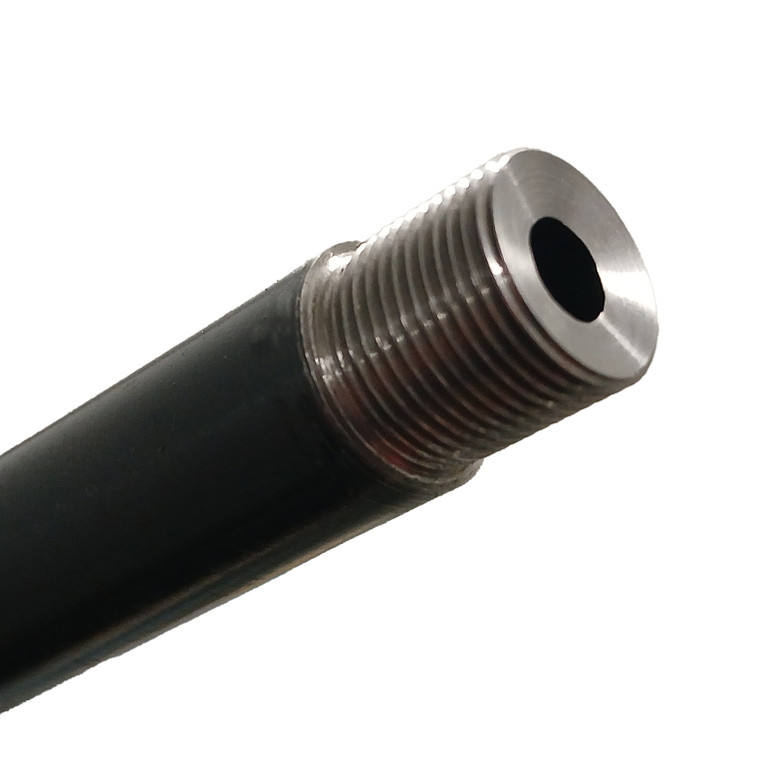
Get your rifle ready for a suppressor or muzzle device with precisely cut muzzle thread.
Some shops "cut to fit", meaning once your suppressor or thread protector fit on the thread, they call it "good 'nuff." Not here. I thread barrels using high-quality tooling on a precision lathe. All threads are cut to UNEF-2A standards, so any threaded accessories you purchase are guaranteed to fit (provided they are quality parts of the correct dimension).
Before a barrel can be threaded:
- Remove scope and any associated removable rings, rails, or other mounts
- Disassemble action from stock; remove trigger group, bolt, and any parts that can be removed
- Remove front & rear iron sight
After a barrel has been threaded:
- Reassemble rifle
- Remount sights and scope
- Zero scope/sight-in irons
If you are comfortable working on your own rifle, performing the above steps will save you a few dollars. Otherwise, I'll handle all of the prep work and reassembly.
Things to consider for a suppressor host:
- The best host is typically a bolt action without sights. This is very common in newer rifles, as manufacturers often ship rifles without any sights at all, expecting shooters to mount a scope.
- Front Sights: Often, if a barrel has iron sights, the front sight will be in the same space as the desired thread location. The decision must be made to machine off the sights, abandon the thread, relocate the screw mounting hole, resolder a new front sight post, or some other option. With this, refinishing the work area may also be required.
- Because of the above mentioned issues with front sights, many shooters choose to abandon the iron sights altogether and mount a scope on the rifle. This allows the shooter so aim over the suppressor, whereas iron sights usually require modification to work around the suppressor.
- Tube-fed systems: Many lever actions and semi-automatics are fed from a tube magazine below the barrel. If a side loading gate is not present, the rifle will require the removal of the suppressor and/or QD mount or thread adapter to allow reloading. This can be done, but is often a hassle and I don't recommend threading these rifles.
- Tube-fed systems (again): Depending on the length of the tube, shortening may be required to allow room for accessories to thread onto the barrel. This adds substantial work, cost, and lead time to the project. Again, I don't recommend threading rifles where this is required.
Check out these FAQs about barrel threading:
Loading FAQs…
- Typical Rimfire Thread:
- 1/2-28 x .400" UNEF-2A
- 22-24 Cal Centerfire Thread:
- 1/2-28 x .600" UNEF-2A
- 26 Cal and UP:
- 5/8-24 x .600" UNEF-2A